“I believe in a former life, I was coffee” – Lorelai Gilmore
The first whiff of fresh coffee beans in the morning. The first jolt you feel in your bones and your brain when the caffeine starts to course through your veins. The first taste of an especially strong, smooth cup.

Drinking a cup of coffee is a completely sensory experience. For some, coffee is a creative pursuit–grinding the carefully selected beans, pouring over in a Chemex, testing the ratio of bean-to-water over many a cup. For others, coffee is a necessity–gulped from a to-go cup while on the run in the morning, or sipped as a 3 o’clock pick-me-up to fight off the inevitable mid-afternoon funk.
For me, coffee is so many things depending on the day, my mood, my plans. I love the taste and smell of coffee; the warmth that pulses through me as I sip a good cup. When I first moved to NYC, stopping at a coffee cart on the way to work for a 75-cent piping hot cup of coffee with a splash of milk in those infamous blue paper cups was my Friday or Monday morning treat. It made me feel like a real New Yorker; the inevitable coffee stains on the majority of my clothes were simply a worthwhile side-effect. I’ve since graduated to taking my coffee black (and ditched the paper cups, I swear) and I love treating myself to different styles and discovering new cafes every now and again.
One of my favorite aspects of traveling to new countries and cities is learning about their coffee culture and how to properly drink a cup of coffee like a local. In so many places, like Vietnam, it’s very distinct and unique. Coffee culture can be incredibly strong (pun intended) and go back several generations. Sure, I don’t love the inevitable Nescafe served in certain countries (like Indonesia, but the country sure made up for it in other ways — see where I drank my morning joe on Gili Gede in Lombok, pictured below) or the instant coffee packets I usually have to drink when trekking or camping but the scenery and experiences more than make up for the watery taste and lingering residual grounds.

So, now that you’re hopefully craving at least one more cup of coffee, here is a roundup of my favorite places in the world (of those I’ve traveled to) that are serving up incredibly unique and amazing coffee experiences. Plus, the special treats to pair with your cup.
Fill up your mug and come with me on a coffee-fueled journey around the world…

Hanoi, Vietnam
What to order: Cà phê sữa đá — or traditional Vietnamese-style iced coffee.
I thought I’d had Vietnamese coffee before but truly you haven’t tasted anything until you drink it from the source. Dark-roast coffee beans filtered through a special stainless-steel filter with a massive dollop of sweetened condensed milk that typically hangs out on the bottom of the cup, needing to be stirred in before every sip. The ice helps cut the sweetness a bit but, damn, my first cup of Vietnamese iced coffee was so strong and so sweet that I was jittery for a while afterwards.
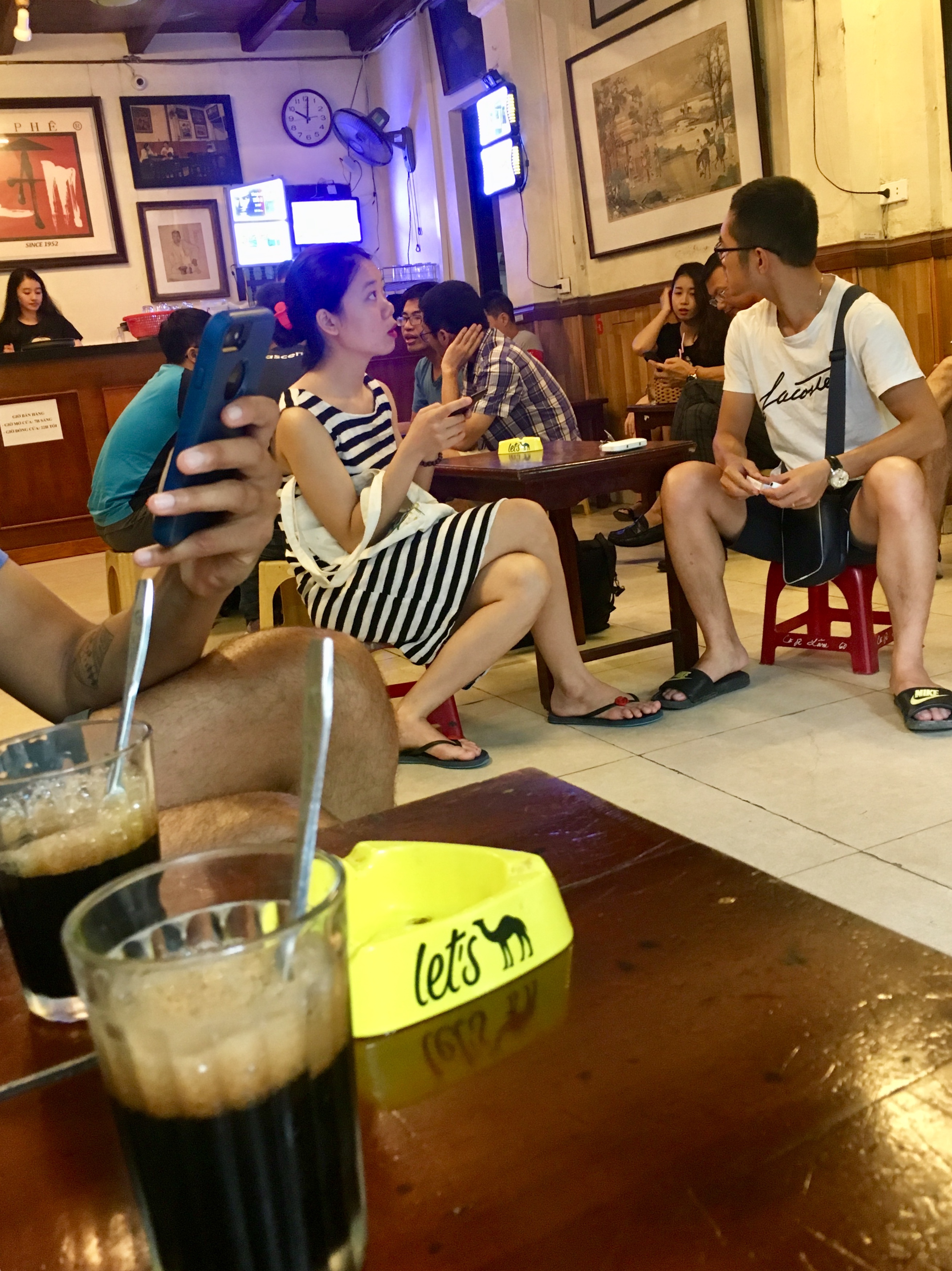
Egg coffee is also a must to try while in Vietnam! They beat egg yolks with sugar and coffee, then filled with egg cream.
Best paired with: Nothing! It has the sweetness covered in the coffee. Just enjoy and sip between bowls of pho.
Where to go: The ca phe culture in Hanoi is something you’ll notice immediately in the city. With at least one cafe on every street, bustling at every hour and spilling odors of condensed milk and strong Vietnamese coffee beans onto the street–cafes are an important part of life in Hanoi. Young people go to cafes late at night after dinner, rather than bars, to catch up with friends and get one last cup of coffee for the day.
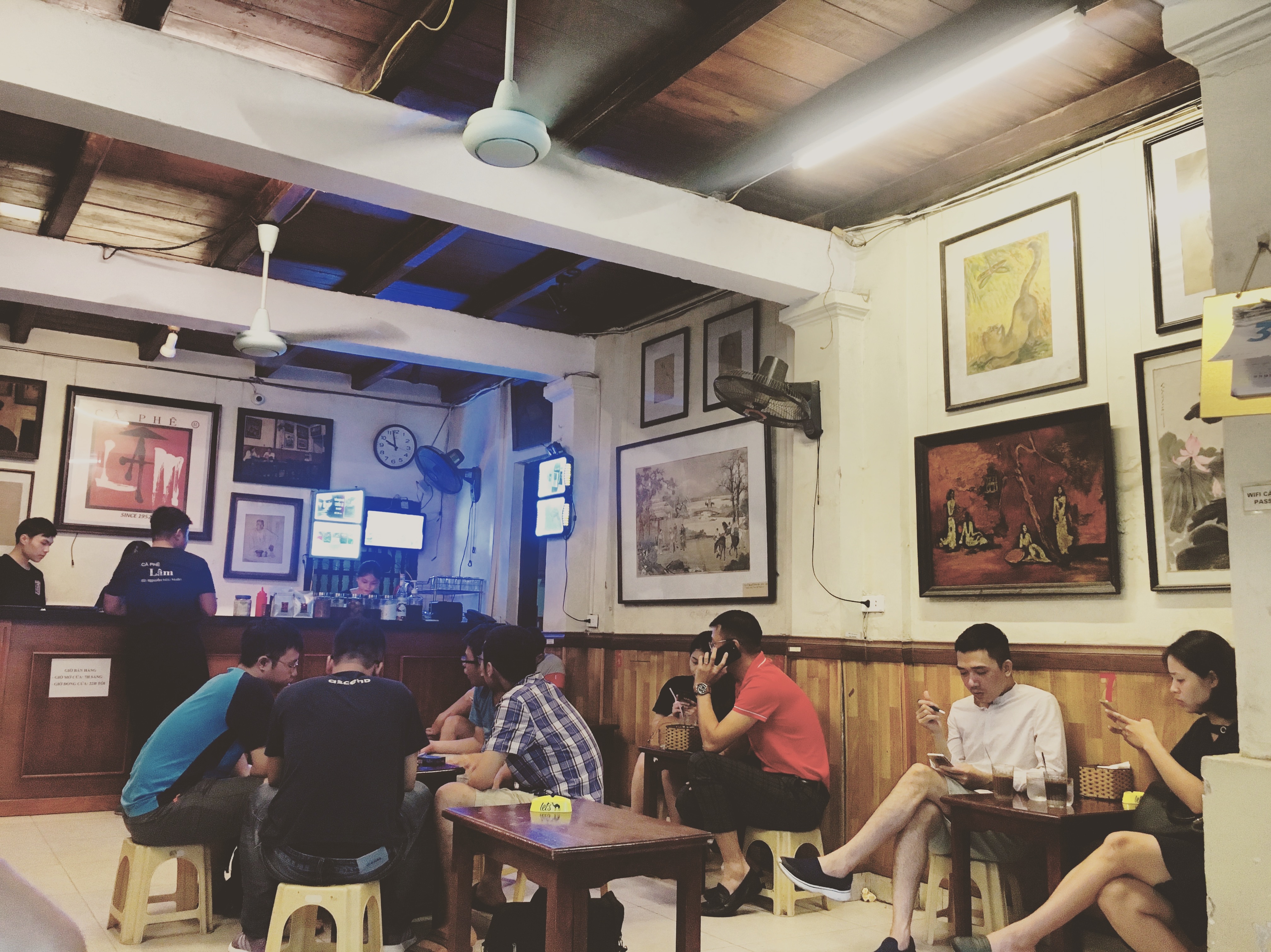
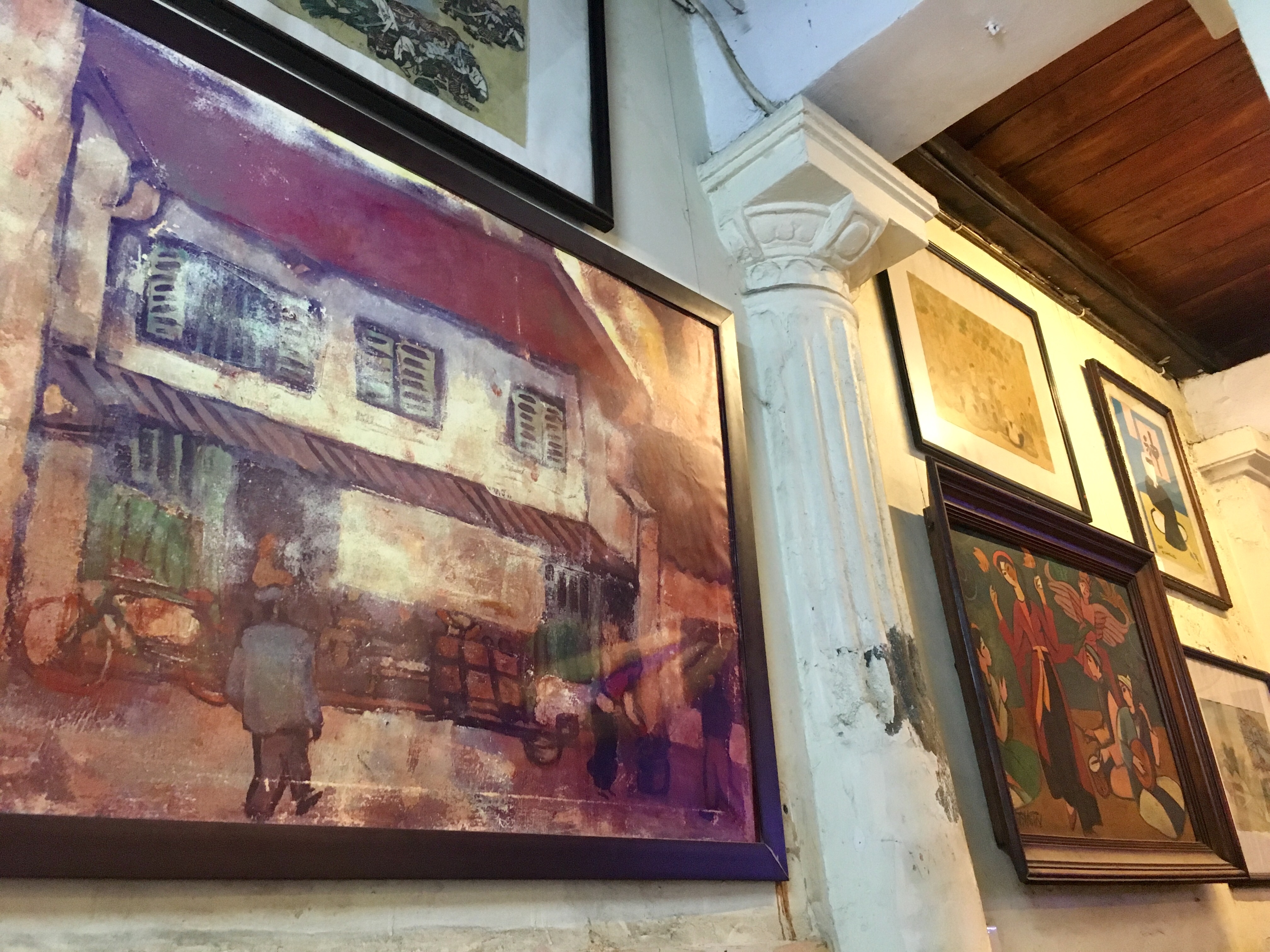
In my (tourist) opinion, the best place to go is Cafe Lam. The coffee is authentic and the atmosphere can’t be beat. Steeped in history, Mr. Lam opened his eponymous cafe as a coffee street stand in 1949 and moved into its current space in 1956, where it became a haven for extremely talented Vietnamese artists during the American war. Many of the patrons couldn’t afford to pay for their coffees or hours spent in the cafe, so they paid by leaving behind their art. Today, Mr. Lam’s art collection–covering the walls of Cafe Lam and beyond, as you’ll see in the photos above–is said to be worth quite a lot, though he insists it will never be for sale.
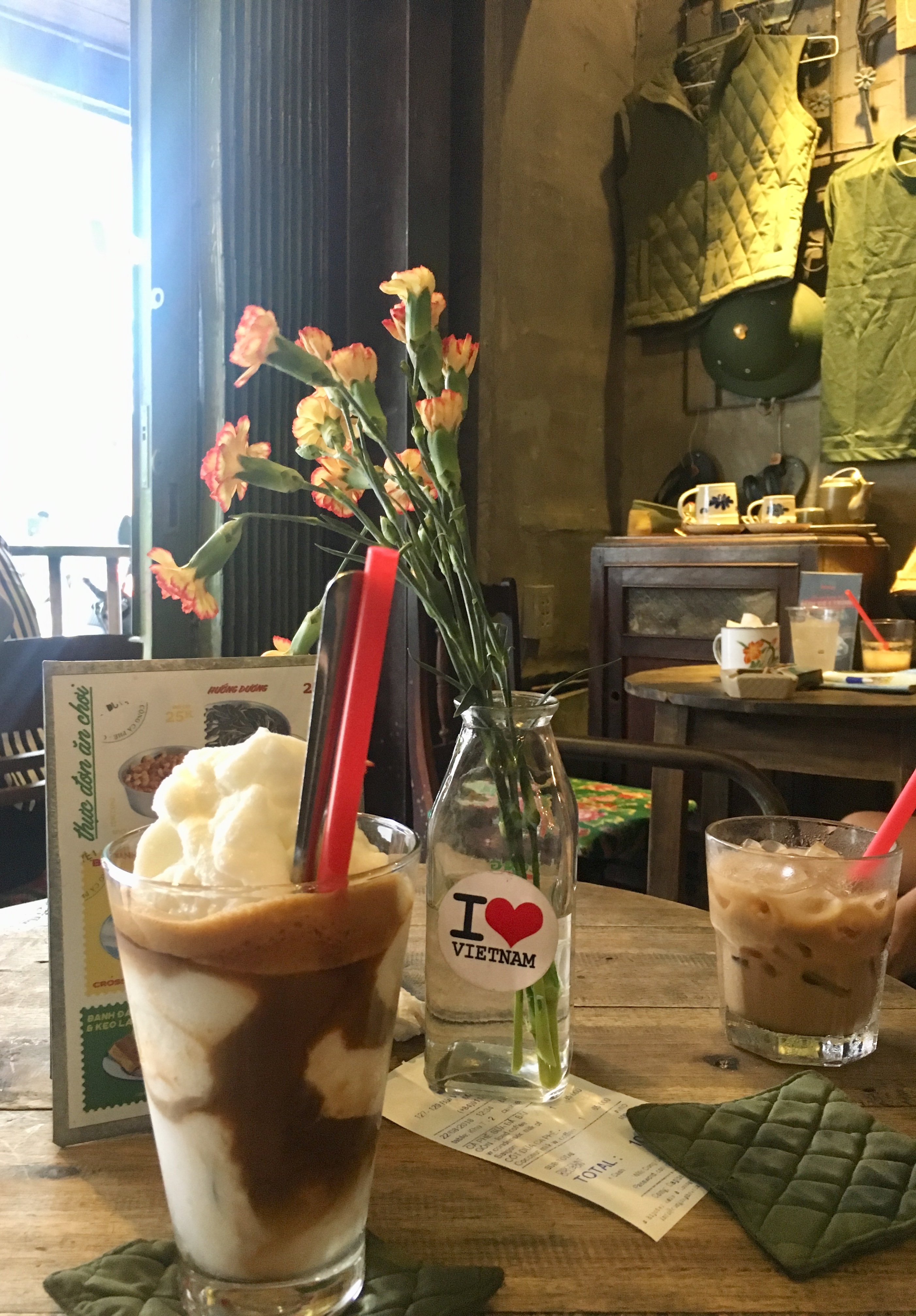

Honorable mention: Cong Caphe is a chain of cafes in Vietnam that serves consistently good coffee with a quite kitschy vibe. My favorite? The coconut coffee–fresh coconut, coffee, and probably tons of sugar over ice. So refreshing and delicious!
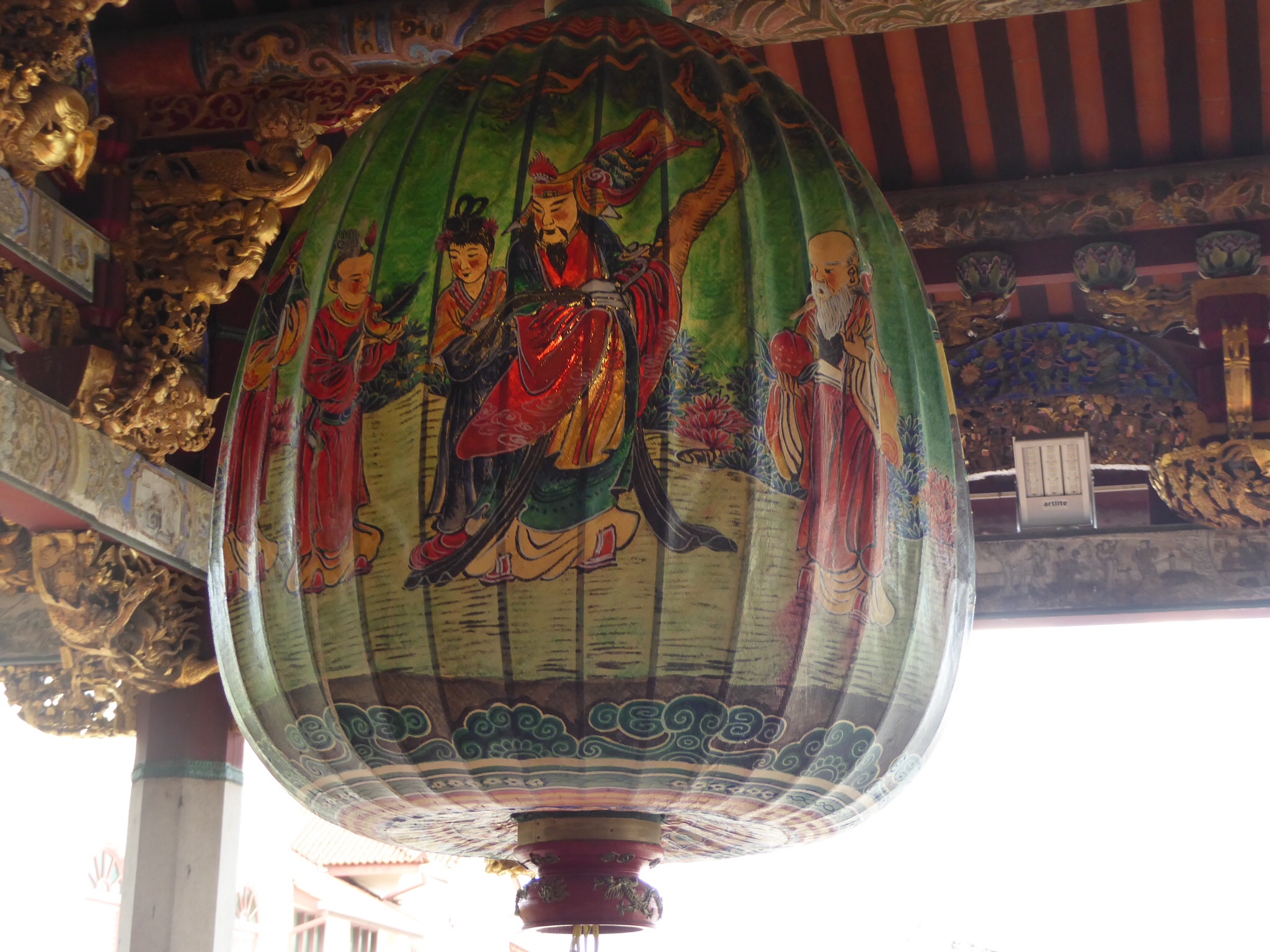
Penang, Malaysia
What to order: Kopi ‘O’.
I somehow went 29 years of life without knowing about famous Malaysian white coffee, and I feel like I’ve been missing out. It’s made of beans roasted in margarine and served with sweetened condensed milk. Traditionally, it was filtered through a sock! It’s unlike coffee I’ve tasted anywhere else in the world–dense, sweet, strong, thick, and absolutely perfect over ice.
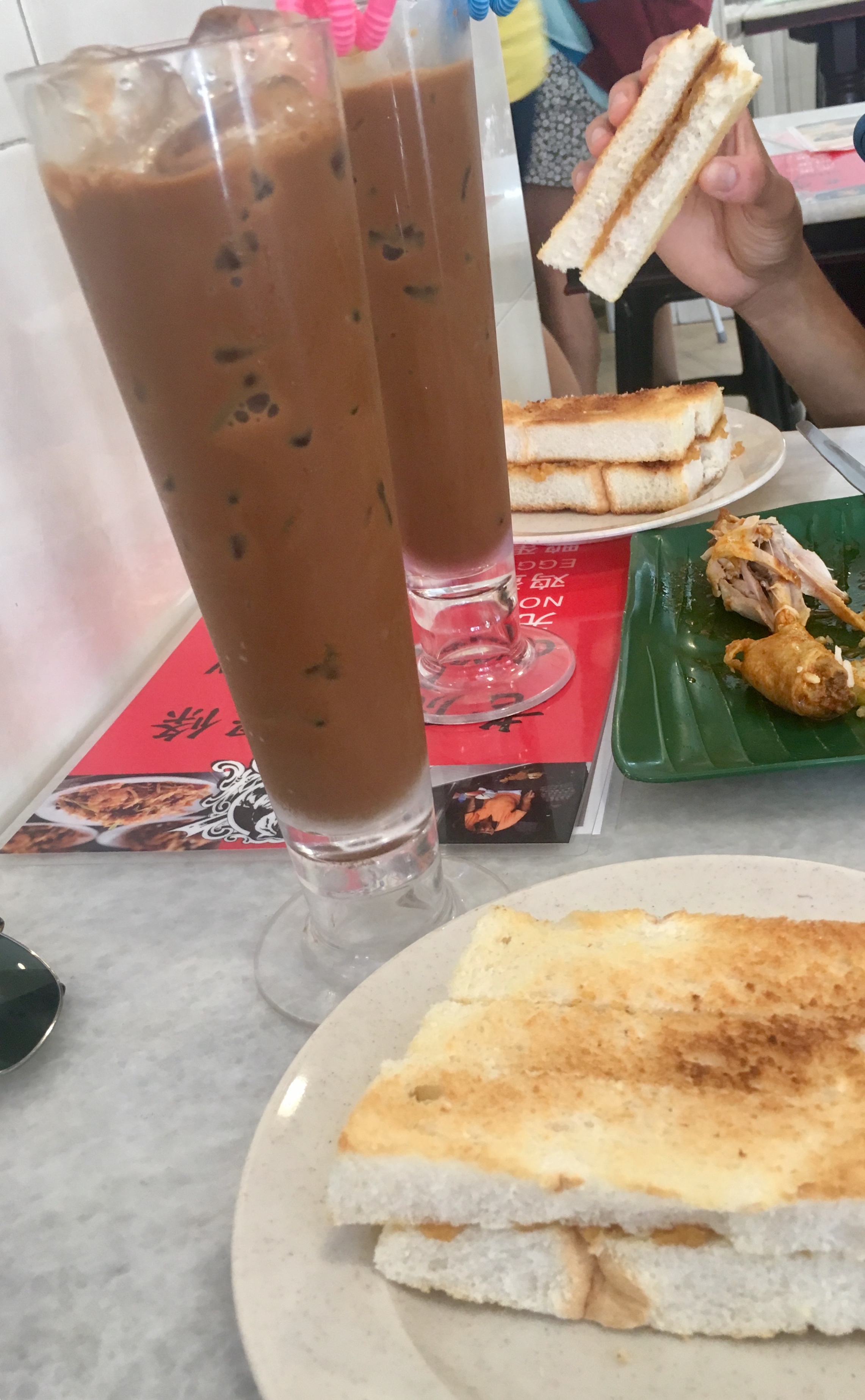
Best paired with: Kaya Toast.
I’m drooling just thinking about the mouthwatering combination of Kopi ‘O’ and Kaya Toast–it is life-changing! A breakfast and snack staple for Malaysians, Kaya Toast is lathered with thick layers of of Kaya (it’s likened to coconut jam by some, and it certainly is a very sweet and thick jam), butter, and sugar on toast. Exactly as rich and sugary as it sounds, and magical. It’s traditionally eaten dipped into soft-boiled egg with a dash of soy sauce. (Is your mouth watering now, too?)

Where to go: Any traditional Kopitiam, or coffee house, in Penang will have you covered on this front. My favorite was an assuming spot called OO White Coffee Cafe. The man who ran this neighborhood spot full of families was so kind. He hustled back and forth from the kitchen to try and keep all of his customers happy. The first time we went, it was packed with people, so when we ordered, he told us it could take up to 45 minutes. We were like, wow, but sure. 15 minutes later, our coffee and Kaya toasts were out!


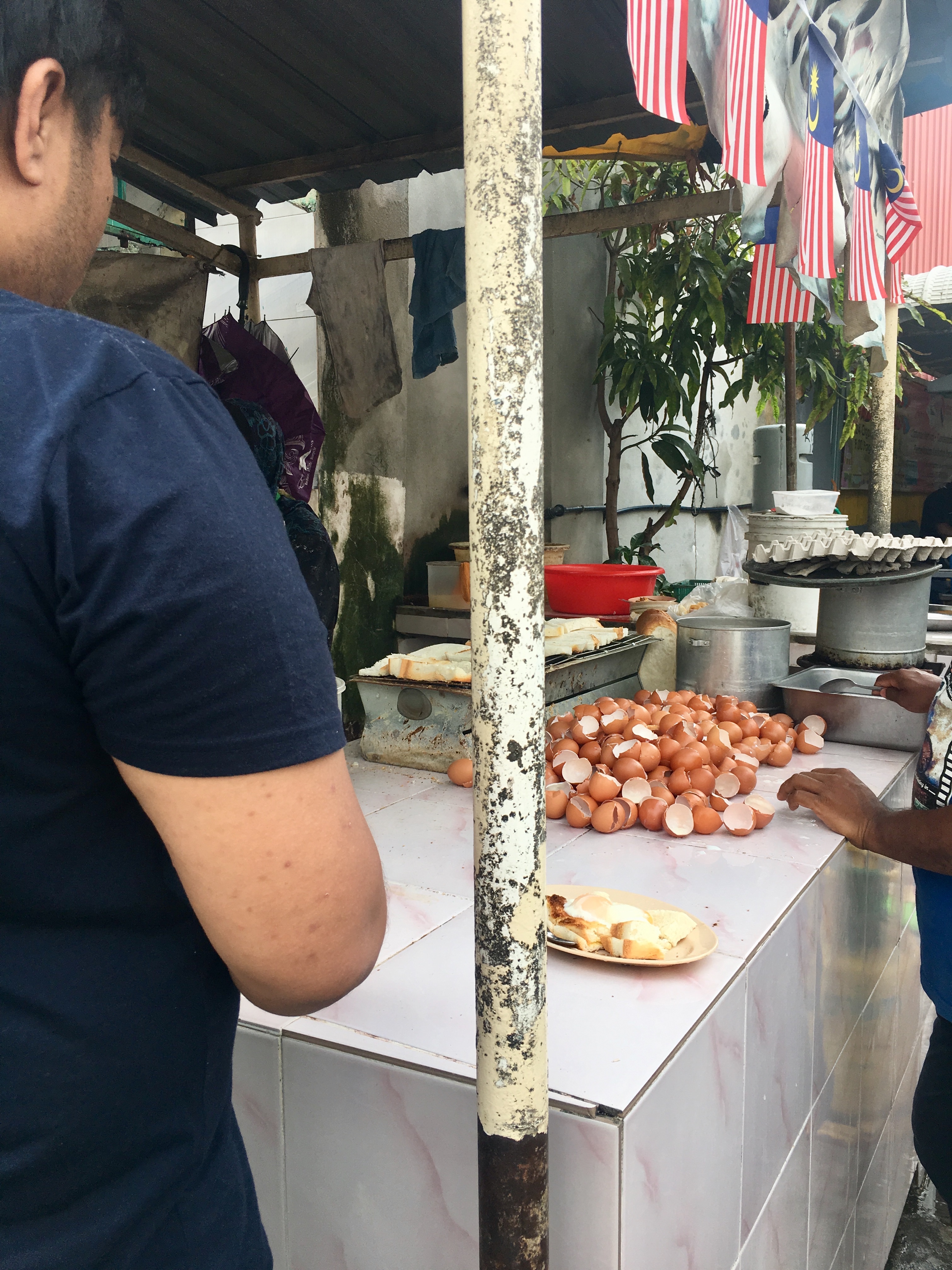
We also found remarkable Kaya toast at a stall on the corner of Jalan Transfer & Jalan Ariffin (‘jalan’ means road), sharing prime street-side real estate with a bomb Roti Canai spot. There was an absurdly long line (and even police directing car traffic around foot traffic because it was a national holiday, so especially crowded) but it was oh so worth it–the Kaya toast stall is run like a smooth machine by a woman with the help of her husband and her son!

Bonus: Because of its significant Malaysian population and influence, Singapore also has some incredible Kopitiams. Checkout Ya Kun Kaya Toast–a famous Kopitiam that was founded in Singapore in 1944 and is now a large chain. It’s Kopi ‘O’ and Kaya toast with soft-boiled egg combo is quite good.

Anywhere, Italy
What to order: Espresso!
Best paired with: Water with gas. (Plus a croissant or gelato or granita couldn’t hurt.)
Where to go: Anywhere and everywhere. Honestly, my espresso consumption has sky-rocketed to unforeseen heights–we’re talking 2-3 per day, at least–every time I’ve been to Italy, beginning as soon as I step foot into an airport in Italy (seriously; maybe I have a problem?). The best thing about Italy is that there’s delicious, dirt-cheap espresso literally everywhere including at passes on the Alta Via 1 trek through the Dolomites.
So rather than telling you where to go, per se, I’ll share the most incredible place I’ve ever had an Espresso in Italy.
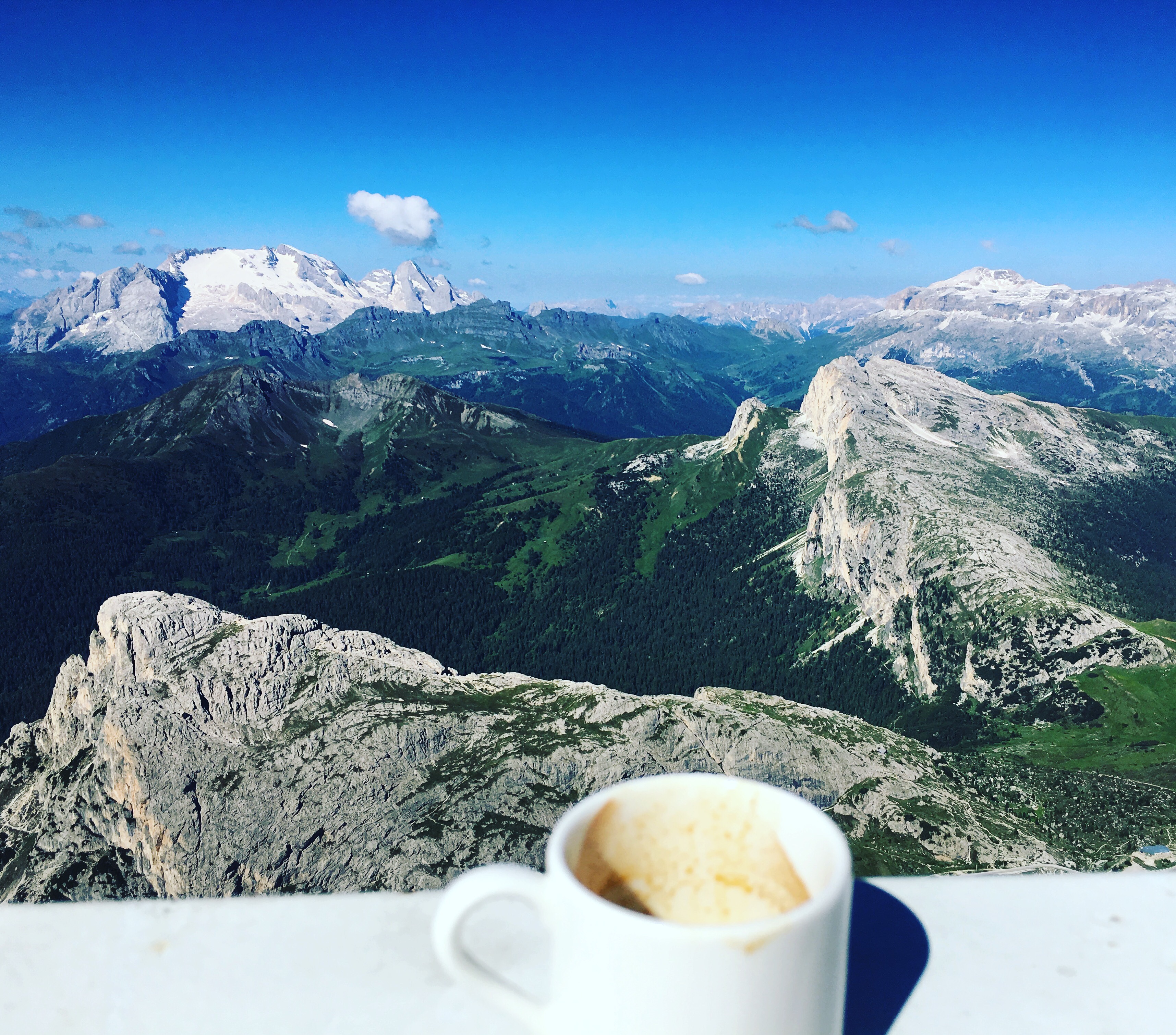
At 2750 meters on the balcony of Rifugio Lagazuoi, with a 360 view of the Dolomites’ picturesque, statuesque, jagged peaks and green valleys. Spectacular.

Luang Prabang, Laos
What to order: Regular coffee–an Americano can’t be beat.
Wandering the streets of Luang Prabang, you’ll pass a row of French colonial mansions, perfectly preserved and some restored as boutique hotels, followed by the glimmering gilded roof of a massive, ornate wat. The unmistakable saffron orange of monk robes flap in the wind on clotheslines throughout the city at wat after wat. It is an incredibly unique UNESCO-protected cultural haven at the confluence of two mighty rivers (the Mekong and the Nam Khan), which still carries a great deal of the history and heritage of an old French colonial town. Which means–you guessed it–cafes with the flair and taste of France abound.
Best paired with: Pain au chocolat.
Where to go: Anywhere with a view overlooking a wat, which are nearly everywhere in Luang Prabang–part of its charm. Le Banneton is the most popular French cafe, but we found Cafe Le Bon Vat Sene to be not only more reasonably-priced but friendlier service with unbeatable sidewalk bistro tables offering a view across the street to (you guessed it!) a beautiful wat.

Outside of the French bakery mold in LPB, Saffron Coffee is the best kind of coffee–strong with a side of social good. Saffron works with hill tribe villagers in northern Laos who were formerly reliant on opium farming, to grow Arabica coffee on their land to help them escape poverty through sustainable livelihoods.

Buenos Aires, Argentina
What to order: A cortado.
Because of the massive Italian immigrant population, Buenos Aires has a strong coffee culture and there are cafes all over. You can’t go to Buenos Aires and not drink a cortado–it simply wouldn’t be right. It’s the go-to coffee drink for Argentinians: an espresso with some milk. Tiny, delicious, and effective.
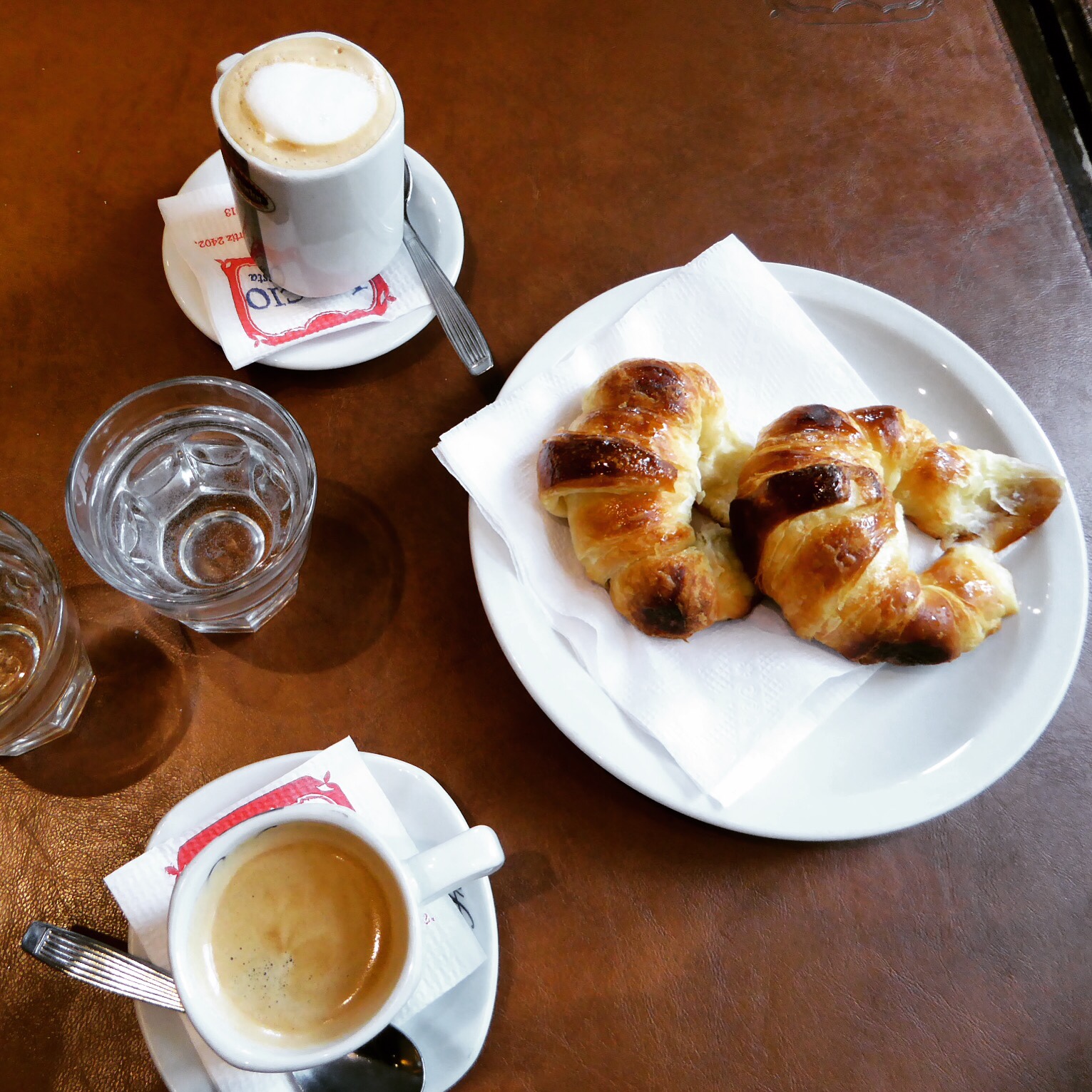
Best paired with: Medialunas.
Another life-changing breakfast staple! Buenos Aires’ breakfast of champions is a cortado with 2-3 medialunas. Glazed, gooey, warm, buttery, and just insanely delicious, medialunas are small, melt-in-your-mouth cousins of the croissant. Medialuna means “half moon” and they certainly conjure up some sort of celestial, stars-aligned, astrological magic when they hit your taste buds.

Where to go: Lucio is the spot. We went on a weekday morning and it was full of older locals leisurely enjoying their cortados and medialunas while reading the newspaper and catching up with friends and family, who would come and go from their tables. The waiter, upon seeing another regular waltz through the door, would wander over to their table, kiss both their cheeks, and ask them in Spanish if they wanted their usual order. Such a delightful environment and the type of establishment that the world could really use more of!
(Tip: Lucio only serves their medialunas special on weekdays! We learned the hard way by trying to go back on a weekend morning. I’m still heartbroken.)
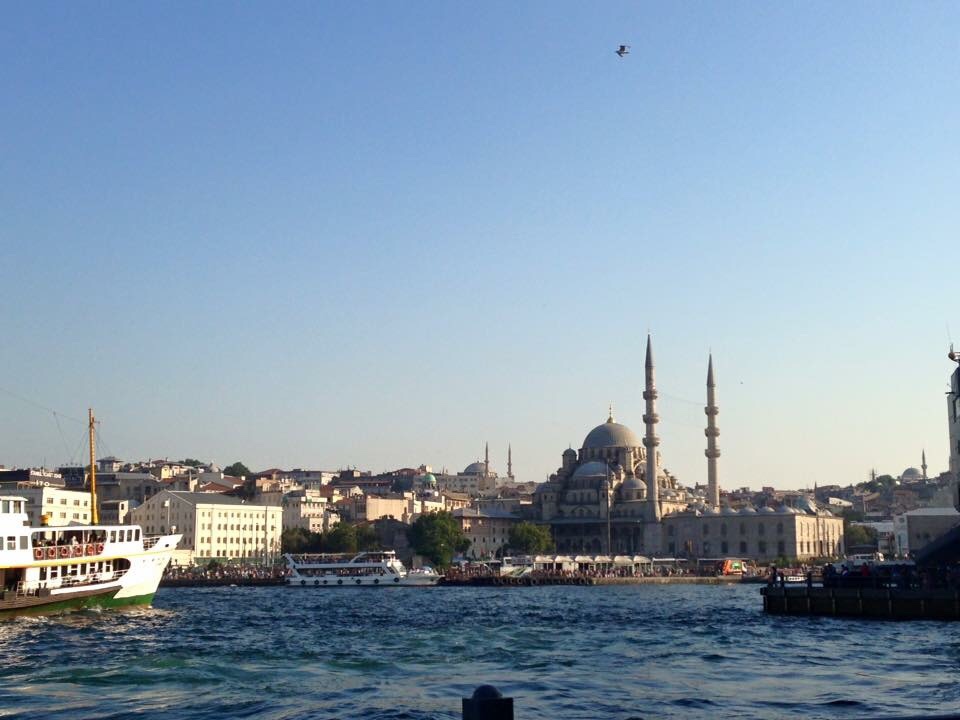
Istanbul, Turkey
What to order: Turkish coffee.
Strong and sugary, just as it should be, Turkish coffee is such a significant part of daily life in Turkey. Sugar is added to the finely ground, unfiltered coffee beans when brewing, so you can specify how sweet when ordering. But most likely it will be extremely sweet. It’s served from a copper cezve and will likely have some powdered beans hanging out in the cup.
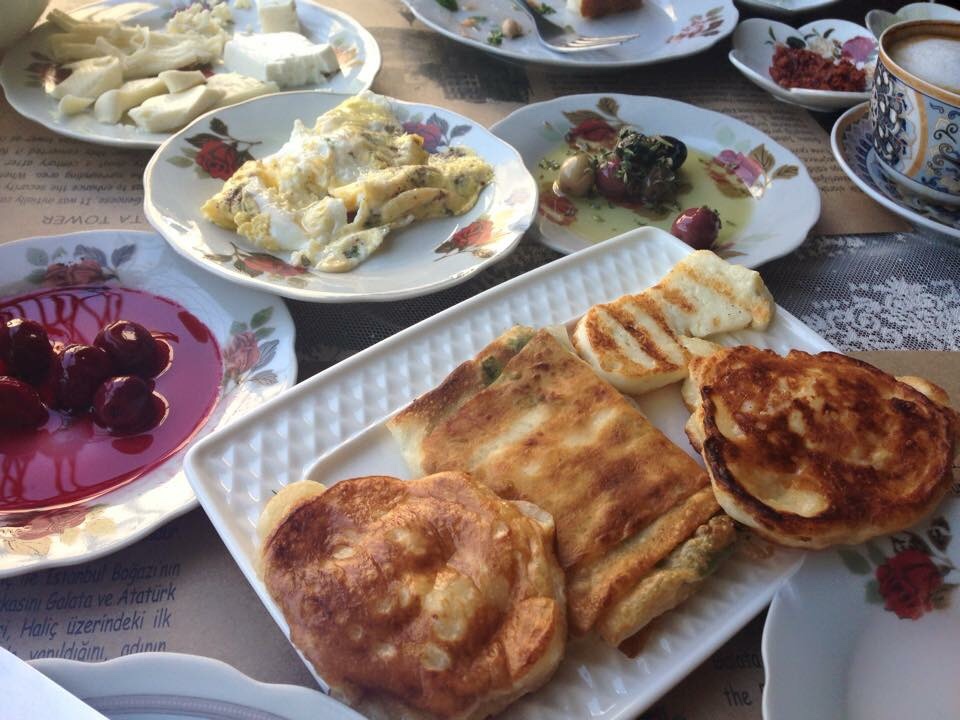
Best paired with: A single Turkish delight or a full Turkish breakfast.
I think the Turkish breakfast may be one of my favorite breakfast styles in the world that I’ve ever had. It is remarkable. A table covered with plates of different sizes with everything from fresh jams and homemade breads, to cheeses and olives, and impossibly fresh cucumber and tomato. Plus egg dishes that are incredible with fresh tomato, like menamanen, and homemade bread. It’s really the ultimate breakfast spread.
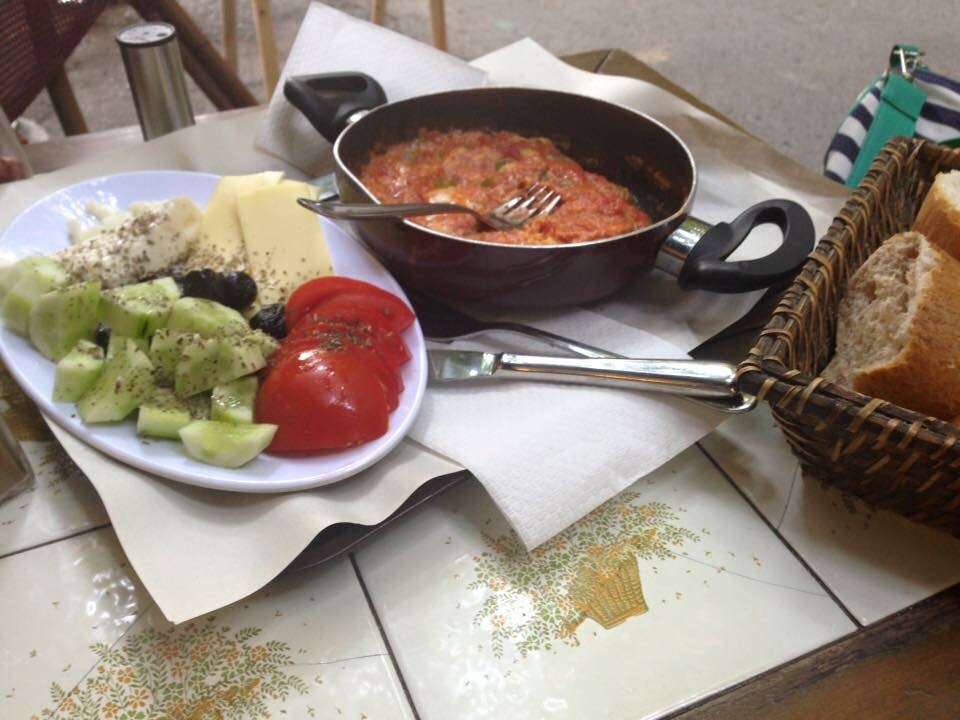
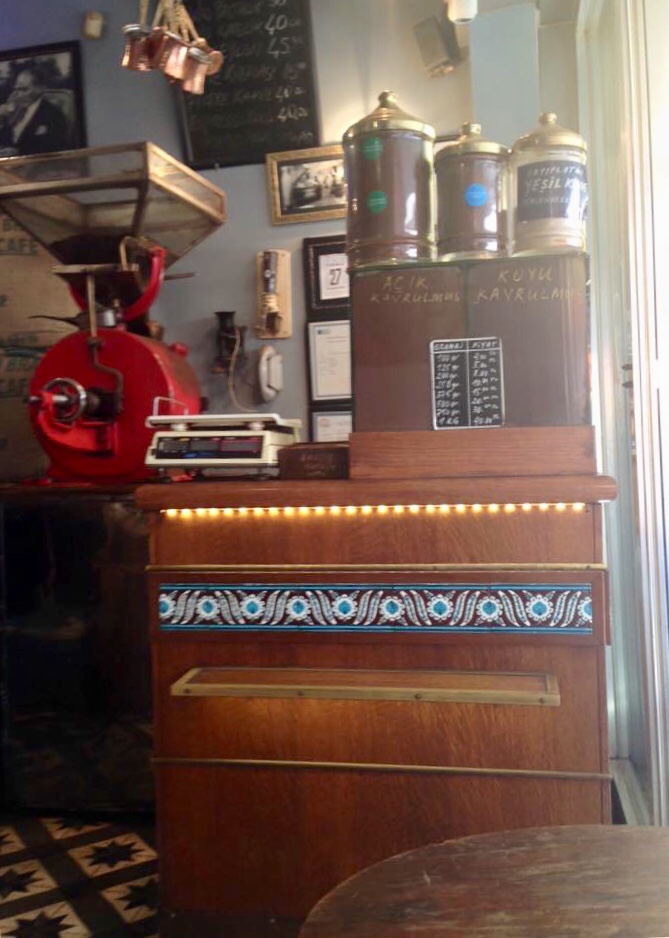
Where to go: Fazir Bey in Kadikoy served us the best Turkish coffee we had while in Istanbul (in 2015). It’s been around since 1923 and has its own roaster.
For full Turkish breakfasts, there are countless options: Asma Alti Cafe serves up a remarkable spread and a mean menamanen (egg dish). Cafe Privato also had a massive traditional Turkish breakfast spread made all the better by delicious homemade jams and a table overlooking the Galata Tower.
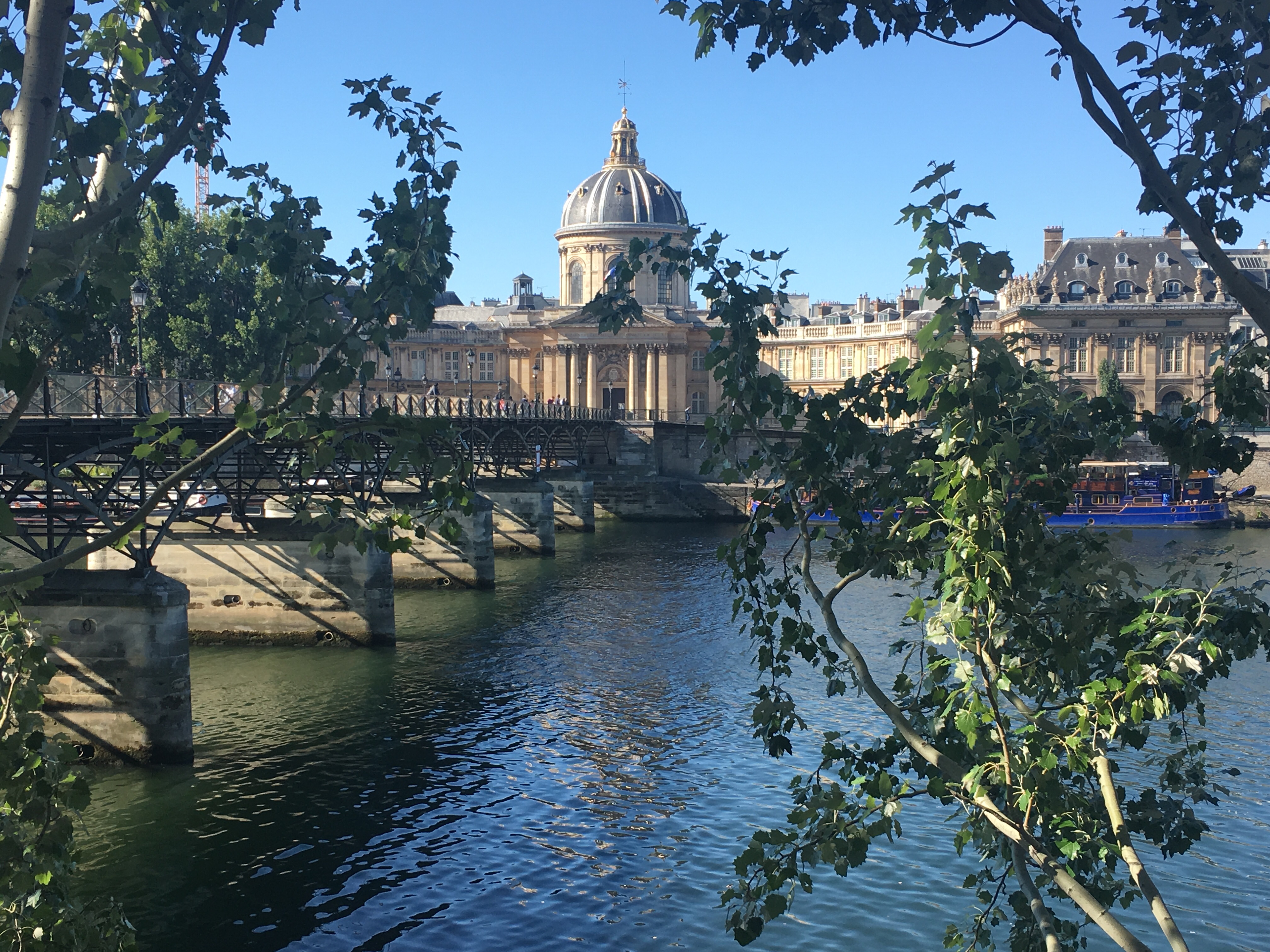
Paris, France
What to order: Un cafe or un cafe au lait.
Best paired with: Pain! (Bread, en francais.) Bread of any kind, but a croissant is best. As buttery and flakey as possible. A chocolate croissant (pain au chocolat) is always a good call, but a plain one with some butter and jam spread on… C’est parfait!
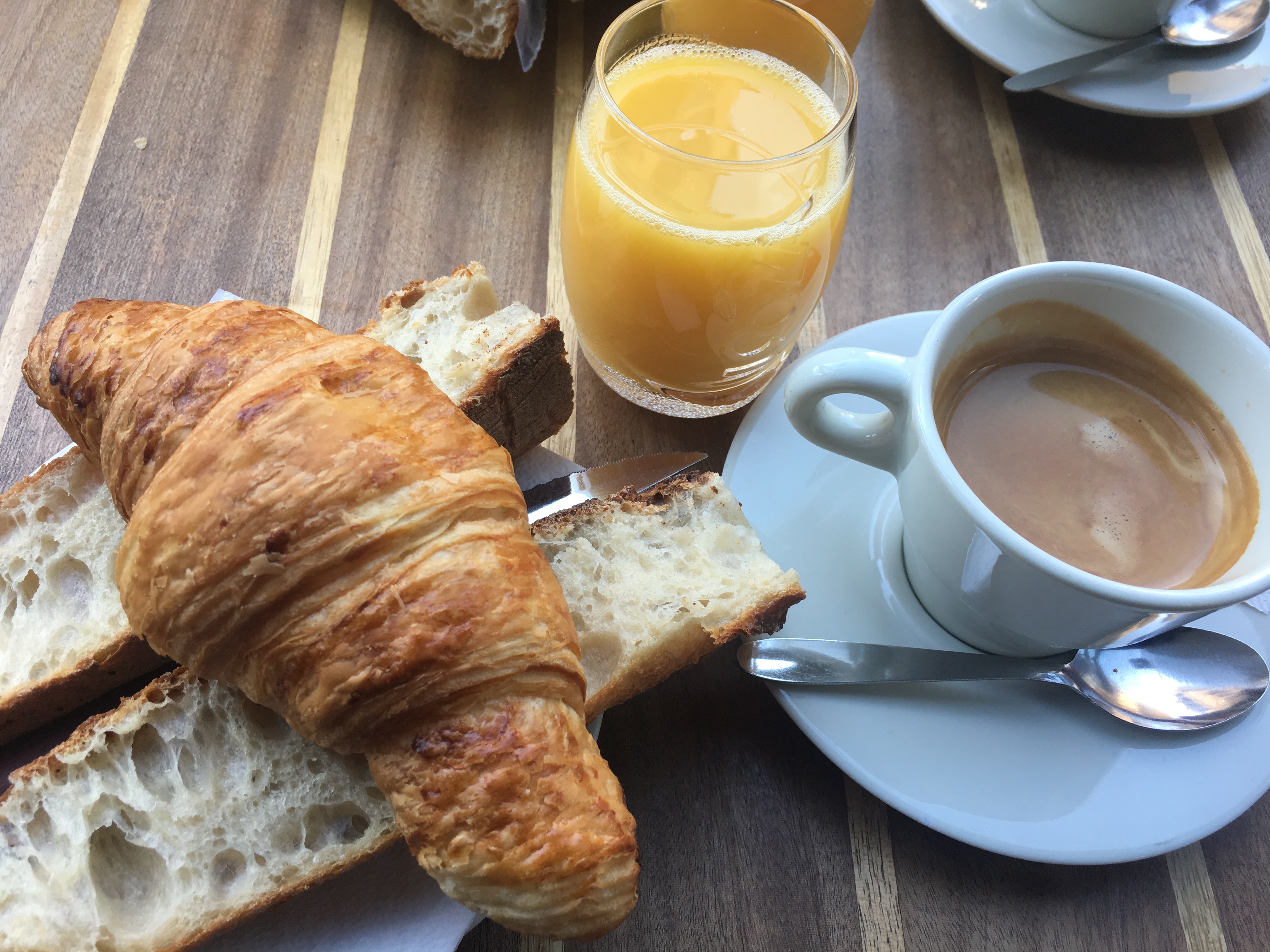
Where to go: Any cafe with an open sidewalk seat overlooking the street–it’s the true Parisian way.

Bring a book, a moleskin to write your thoughts or your poetry or your novel, or simply sip and people-watch. Because people-watching in Paris is superior to people-watching anywhere else, let’s be honest.

Pyshechnaya in St. Petersburg, Russia
What to order: The super heavy-on-the-milk-and-sugar drip coffee being served out of the massive, old stainless steel coffee thermos on the counter is the only way to go.
Best paired with: Donuts, duh!
Pyshechnaya means “donut shop” and, well, its donuts + coffee + ambiance combo is more why its on this list than the sugary coffee. Go on any given day and you’ll find old Russian women eating 3-4 donuts each, which is the norm, covered in oil and powdered sugar. The regulars eat the donuts by wrapping the donuts in pieces of paper on offer at the register to try to absorb some of the oil and protect their fingers; the donuts are so oily that you might have to switch out the paper a couple times per donut. The donuts are sticky and fluffy and sugary–I could only eat one, but they are something to experience!

Where to go: There’s only one place to go for this combo! Pyshechnaya means “donut shop” and has been serving up donuts and coffee since it opened its doors in 1958. It basically hasn’t changed inside since, retaining its retro Soviet vibes amidst a couple of small tables and some standing-room-only counter space lining the storefront. It’s likely you’ll find a line when you go, and you’ll certainly be greeted by overwhelming odors of sticky sugary goodness.
Now that we’ve circled the globe for authentic coffees and treats, I’d love to know what places (cities, countries, cafes) I should add to my list.
 Anna Logs It