Located on the banks of the beautiful Perfume River in central Vietnam sits one of the country’s lesser-known cities: Hue (pronounced ‘hway’). Once the seat of Nguyen Dynasty emperors and the national capital for nearly a century and a half, until 1945, Hue is an underrated tourist destination with so much to love: the delicious local food specialties, the historic and grand emperors’ tombs, the crumbling citadel, the riverfront, and the delightful people.
Here are just a few of the highlights from our 36 hours in Hue.
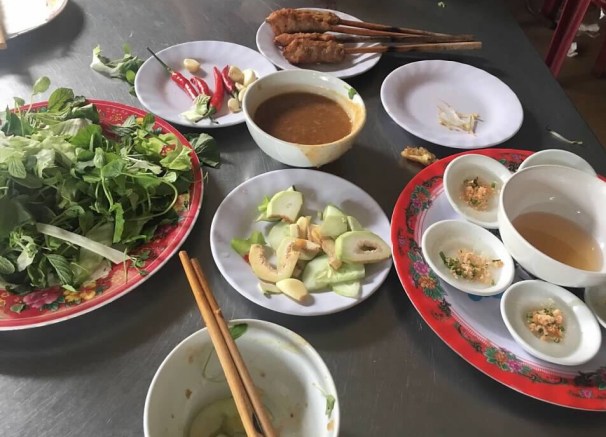
This photo doesn’t do this food justice and for that, I am truly sorry. But if you knew how it tasted, your mouth would still be watering. Hue is a foodie’s paradise. The Nguyen emperors and their hundreds of wives had very distinct tastes, especially Emperor Tu Duc who was notoriously picky, so there are countless local delicacies that were created to appease their appetites. So, it only made sense that our first stop in Hue was for food, and we hit the jackpot! We stumbled into Lac Thien Restaurant, which sits just outside of the citadel moat. It is run by four sisters who were born and raised in Hue, and are so welcoming and hilarious, and incredible cooks. One of them made us a bottle opener (a piece of wood with a nail sticking out just enough) and wrote on it as a “souvenir” for us.
We had a feast of local specialties that did not disappoint: nem lui, ground pork grilled on a lemongrass skewer served with rice paper and accoutrements to make a little roll of deliciousness; banh khoai, savory and crispy fried rice flour cakes filled with prawn; and banh beo, steamed rice cakes cooked into tiny dishes, topped with tiny dried shrimp and spring onions and, of course, dipped in sweet fish sauce.
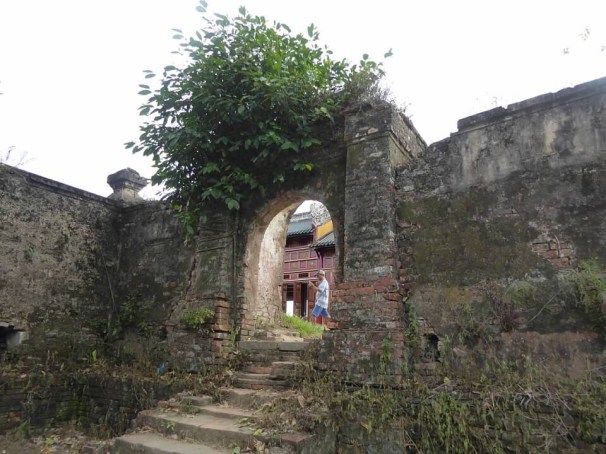
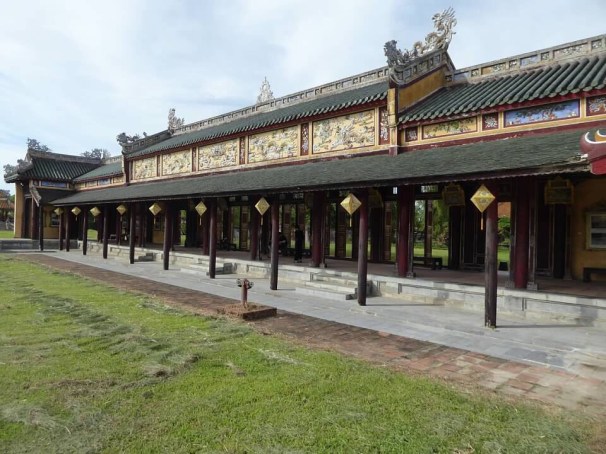
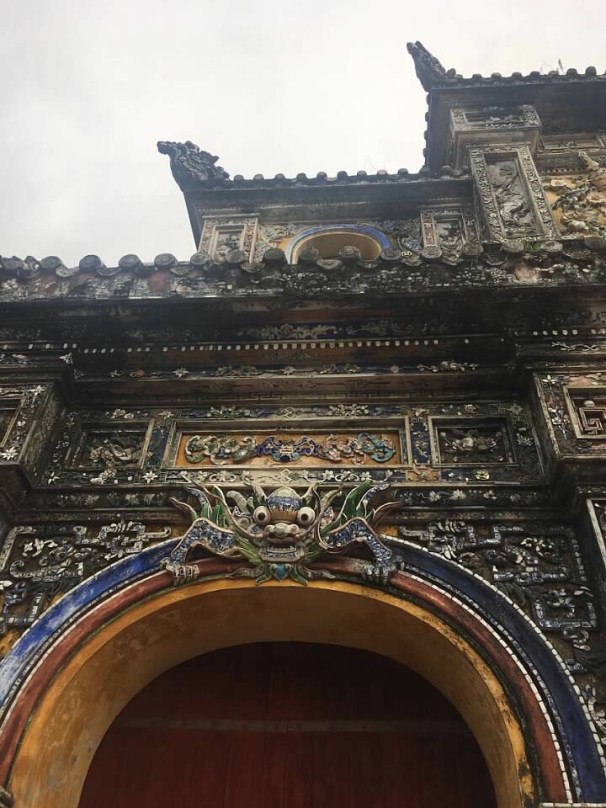
Hue’s Imperial City was built by Emperor Gia Long in the early 1800s, with thousands of workers ordered to build the walled citadel and ringing moat. The Imperial City is enclosed by a second moat and was once an ornate, intricate royal complex with a series of gardens, pavilions, palaces, and gates. Out of 160 buildings, only 10 major sites remain because of the destruction Hue faced in the American War, including in the Battle of Hue in January 1968.
Now, after being declared a UNESCO world heritage site in 1993, the remains of the Imperial City are being restored and preserved. I loved how beautifully overgrown much of the grounds were: crumbling remains with unruly weeds growing out of them or grass growing over stone slabs that show where palaces once stood.


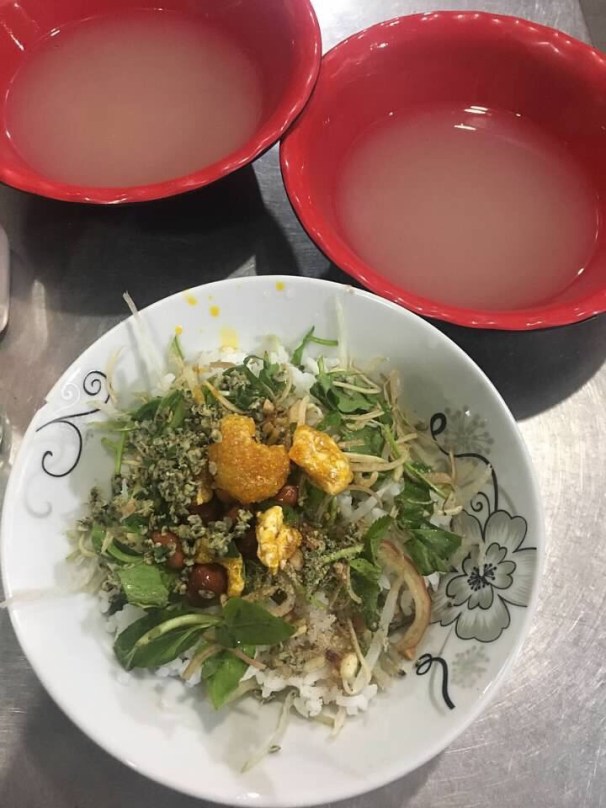
Another local Hue food specialty is com hen: extremely cheap (aka 20 cents per bowl) rice cooked with fresh herbs and chopped clams from the Perfume River. The dish touched all the textures and flavor profiles, and was so delicious. We were the only tourists at the spot we stopped in for dinner on a local side street that the amazing receptionist at our hotel told us to check out.
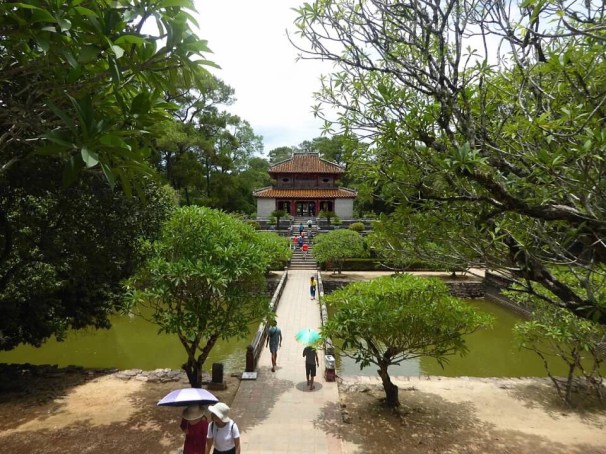
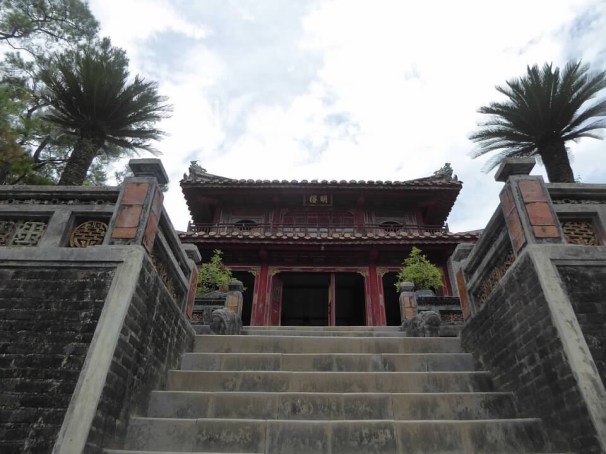
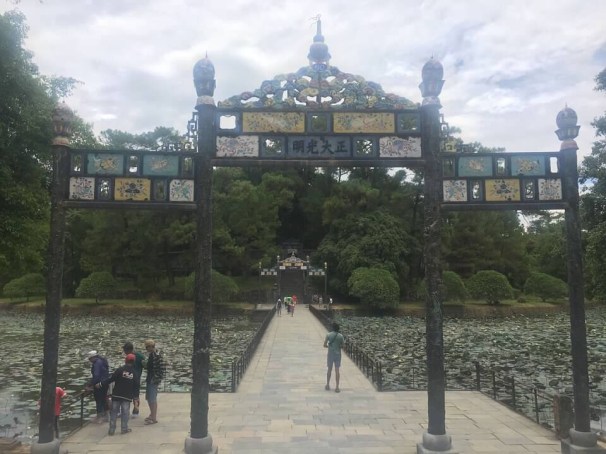
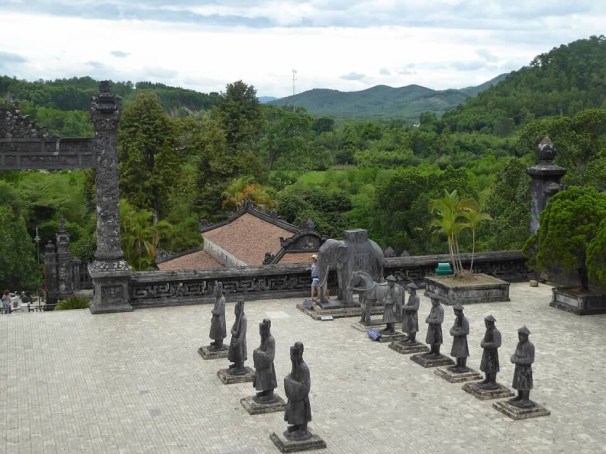
The emperors’ lavish tombs that dot the green expanses of land south of city are the other main sights to see in Hue, and a disheartening reminder of the reality of French colonial power in Vietnam – as emperors were puppets to the regime, appeasing French wishes over the needs of their people. Both Emperor Tu Duc and Minh Mang designed their tombs to enjoy in life and after death, meaning they are set in relaxing, green settings with small ponds so they could be peacefully surrounded by nature. They’re extravagant, to be sure, and riddled with reminders of the excess of the dynasty. The gate to Minh Mang’s tomb is only opened once a year on the anniversary of his death. And Tu Duc, who had 104 wives and countless concubines, lived a life of luxury; no one knows where he was actually buried (with treasure) because all 200 of the servants who buried the king were beheaded to keep it secret and safe from grave robbers.


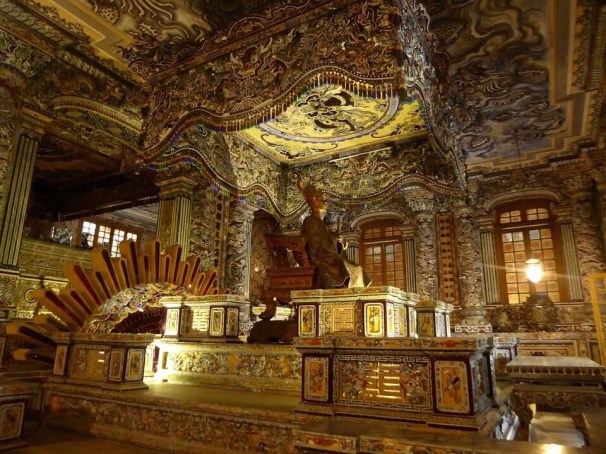
Then there’s the exorbitant hillside tomb of Khai Dinh, the penultimate emperor of Vietnam until 1925, who was – understandably – disliked by the Vietnamese because he was seen as a puppet of the French. Khai Dinh raised the taxes on the Vietnamese to pay for the construction of his tomb. Awful! His tomb is grandiose in design on the outside and inside; a synthesis of Vietnamese and European design elements, there’s a gaudy gilt bronze statue of him inside.


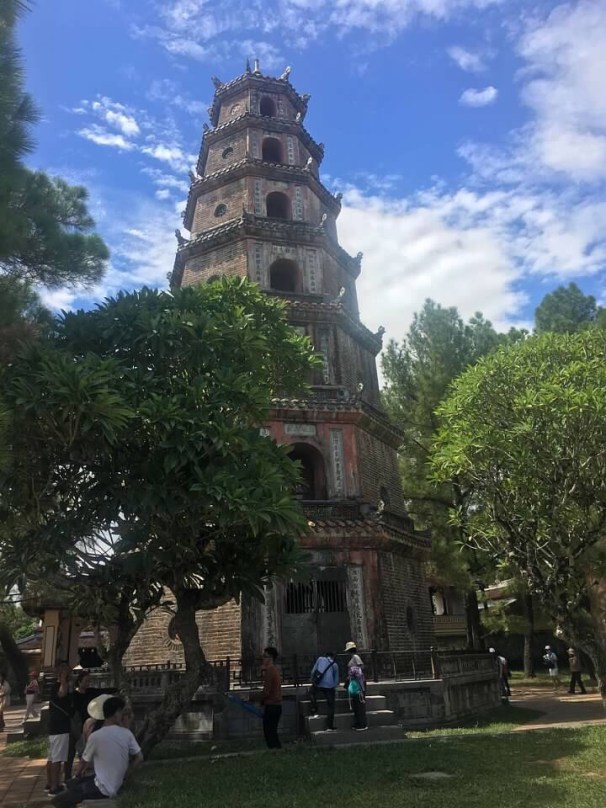
Another popular sight, the Thien Mu Pagoda is built on a hill overlooking the Perfume River and is an icon of Vietnam – interestingly, it has been a flashpoint of political demonstrations since the 1960s.
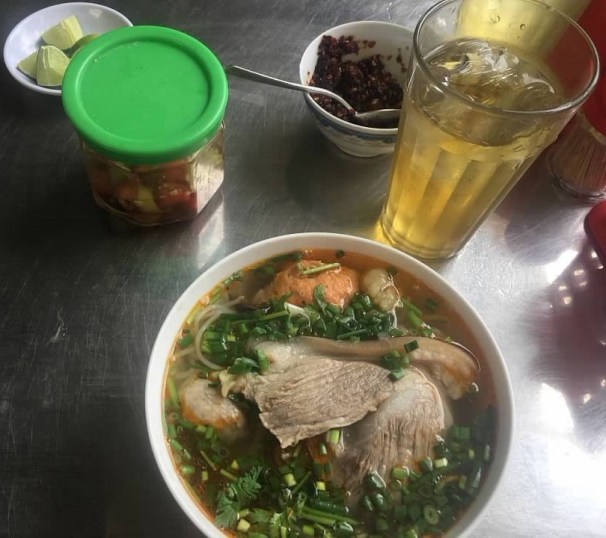
One last local food specialty, and perhaps the most famous: bun bo Hue, the signature noodle dish with tender beef or (in our case) pork, vermicelli, and lemongrass. Best when washed down with some fresh sugarcane juice. We went to a local spot with our tombs tour guide, which was fantastic and hearty. It may or may not have given me a pretty bad go of food poisoning, but it was worth it.
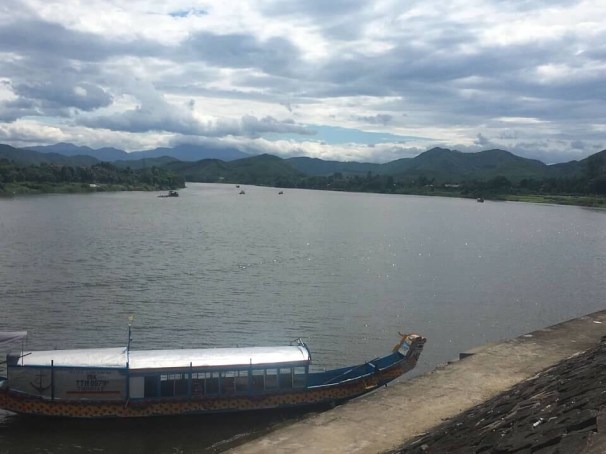
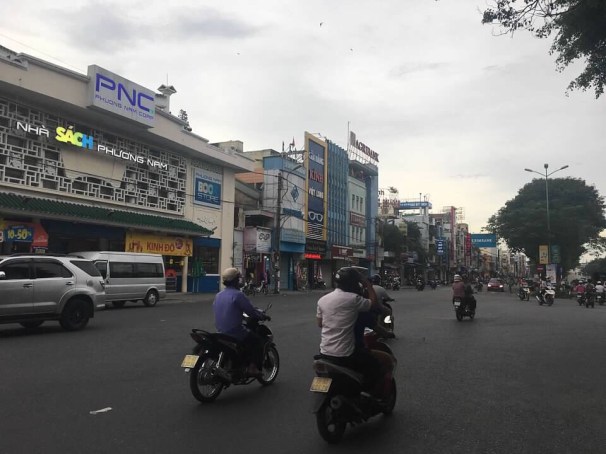
I’ll leave you with a couple final snaps: one of the Perfume River and one of the street scenes on the main road that runs parallel to the citadel walls. Hue made for an amazing day-and-a-half stop in Central Vietnam. I’d highly recommend it for anyone traveling through Vietnam with some extra time, a love of food, and an interest in Vietnamese history – and incredibly kind people.
 Anna Logs It